The environment you sleep in matters as much as how long you sleep.
The Problem With Most "Cooling" Products
You've probably felt it before. You pull a cooling blanket over yourself and it feels refreshing — for about twenty minutes. Then, slowly and quietly, the magic disappears. The blanket starts to feel warm. A little damp. By 2 or 3 in the morning, you're kicking it off entirely.
This isn't a coincidence, and it's not just your body temperature running hot. It's a design problem. Most cooling bedding is built around a single mechanism — a chemically treated surface that absorbs initial contact heat — without accounting for what happens during the hours of continuous sleep that follow.
Real cooling comfort isn't a moment. It's a system.
Why Cooling Fails: The Three Root Causes of a Hot, Sticky Night
1. Heat That Can't Escape
Your body generates continuous heat while you sleep. If the bedding around you has poor airflow, that heat has nowhere to go. It accumulates in the microclimate between your skin and the blanket, gradually raising your surface temperature regardless of how "cooling" the outer fabric felt at first touch.
Breathability — measured by how much air can pass through a fabric per unit of time — is not a bonus feature. It's the foundation of any sustained cooling experience. Without it, you're essentially sealing yourself inside an insulated pocket.
2. Moisture That Stays on Your Skin
The average person perspires between 0.5 and 1 liter per night during sleep. In summer, that number goes higher. When sweat doesn't get absorbed and moved away from your skin quickly, it creates a layer of humid warmth — that familiar feeling of lying in your own dampness.
This is why so many people who don't feel particularly "hot" still wake up feeling uncomfortable. The issue isn't temperature alone. It's moisture sitting where it shouldn't.
3. The Fading Cooling Effect
Many budget cooling products rely on chemical coatings applied to fabric surfaces. These coatings do create a noticeable cooling sensation on first touch. The problem is that they wash off. After several laundry cycles, the effect diminishes or disappears entirely, leaving you with an ordinary blanket that was once marketed as cooling.
Sustainable cooling requires fiber-level properties — where the cooling behavior is structural, not applied.
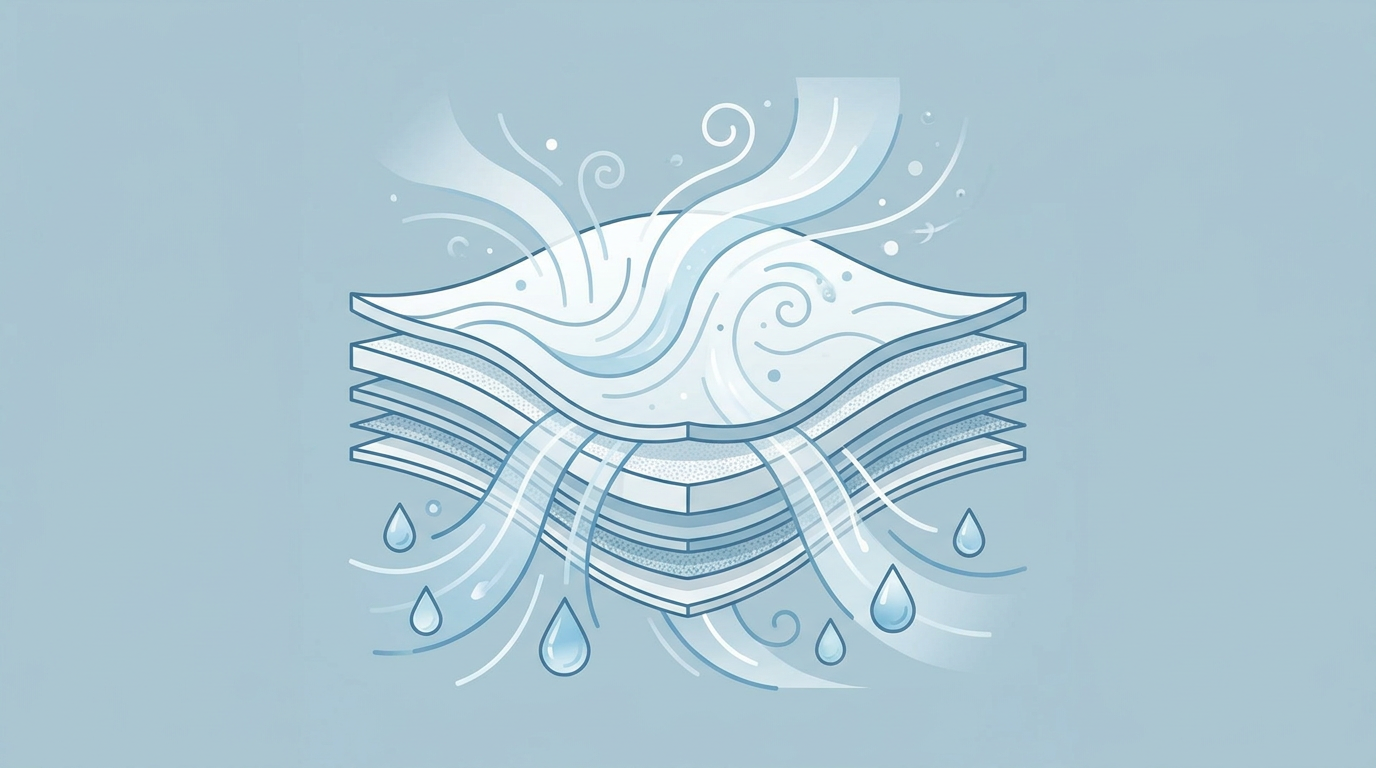 Genuine cooling requires a system: heat dissipation, moisture wicking, and airflow all working simultaneously.
What Genuine Cooling Comfort Requires
A well-designed cooling sleep system needs to solve all three problems simultaneously:
Continuous Heat Dissipation — not just absorbing heat on contact, but actively allowing heat to flow away from the body throughout the night. High airflow fabric structures — those that allow air to circulate freely through the weave — are essential to this.
Rapid Moisture Management — fabrics capable of absorbing perspiration quickly (within seconds) and then spreading it across a larger surface area to accelerate evaporation. This keeps skin dry and removes the humidity that traps heat close to the body.
Durable Cooling Properties — cooling that comes from the fiber's physical structure rather than a chemical treatment. This kind of cooling doesn't wash out, doesn't fade with use, and doesn't require any "reactivation."
These three properties work together. A fabric that's cooling to the touch but traps moisture will still feel uncomfortable within an hour. A fabric that absorbs sweat but doesn't breathe will leave you lying in a damp, warm pocket. Genuine comfort requires the full system.
The Cooling Series: Built Around the Full System
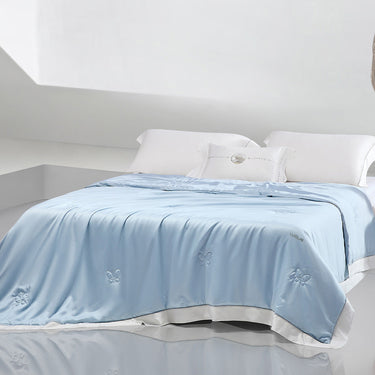
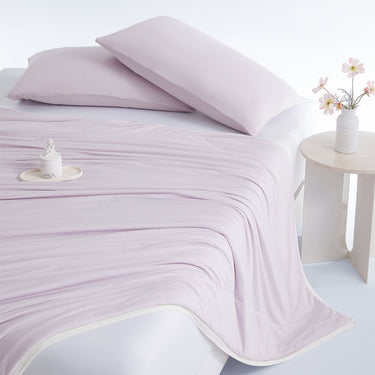
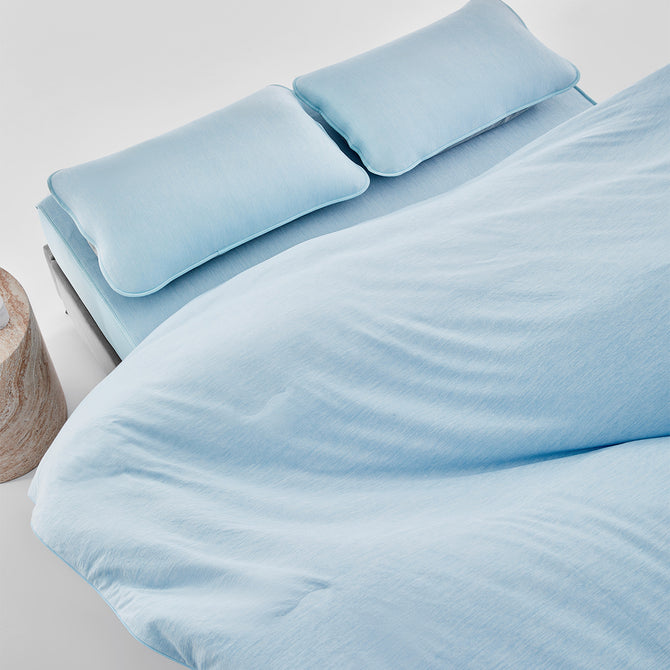
Our Cooling Series was designed to address all three root causes of nighttime heat, not just one.
The outer face delivers a high-conductivity cooling effect — drawing heat away from skin on contact using fiber structure rather than chemical additives. The cooling performance is durable, remaining effective through repeated washing. For those who want a more subtle cooling sensation, the reverse side offers a softer, more moderate option — a small but meaningful detail for people who run cooler or prefer flexibility across seasons.
The inner layer is built for moisture management. The lining fabric achieves moisture absorption in under 3 seconds and reaches the highest moisture-wicking classification — comparable to performance sportswear. Combined with a breathability level significantly higher than conventional cotton or silk comforters, the blanket actively moves heat and moisture away from the body, not just at the surface but through the entire structure.
All materials meet Class A textile safety standards — the highest classification in China's national textile safety framework, safe for direct skin contact and appropriate for sensitive skin.
If you've been cycling through cooling products every summer without finding one that works through the night, the answer was never about finding something colder — it was about finding something that breathes.