 A clean sleep environment isn't just comfortable — it's a health decision.
The Houseguests You've Never Seen
Dust mites are among the most common household allergens in the world, and your bed is their preferred habitat. A single mattress can host millions of them. They don't bite, they don't sting, and they're invisible to the naked eye — which is exactly what makes them so easy to overlook.
What causes allergic reactions is not the mites themselves but the proteins in their fecal particles and shed skins. These particles become airborne when bedding is disturbed — when you turn over, pull back the covers, or simply breathe close to your pillow. For people with allergies, asthma, eczema, or respiratory sensitivity, this continuous, low-level exposure is a significant but largely unrecognized source of nighttime discomfort.
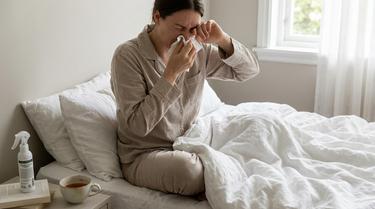
If you regularly wake up with a runny nose, sneezing fits in the morning, itchy skin with no obvious cause, or a persistent feeling of fatigue despite adequate sleep hours — it's worth considering whether your sleeping environment is contributing.
Why "Anti-Mite" Claims Are Often Misleading
Walk through any home goods store and you'll find a range of products claiming mite protection. The reality is more nuanced.
Chemical Treatments are the most common approach: anti-mite agents are either applied to fabric surfaces or incorporated into fiber coatings. Some of these are effective initially, but effectiveness degrades with washing and exposure to moisture. More importantly, questions about long-term skin safety of synthetic chemical agents remain relevant — particularly for children, the elderly, or anyone with sensitive skin who spends eight hours per night in direct contact with treated fabric.
Thread Count Alone Is Not Enough — a common misconception is that any high-thread-count fabric keeps mites out. Thread count matters, but it's the combination of thread count, yarn thickness, and weave density that determines whether a fabric's pores are genuinely too small for mites to pass through. A fabric can feel fine and soft and still have openings large enough to allow mite penetration.
Single-Layer Protection Leaves Gaps — protecting the outer fabric without addressing the filling material means mites can still accumulate inside the bedding structure over time.
Genuine mite protection requires a structural solution, not a coating.
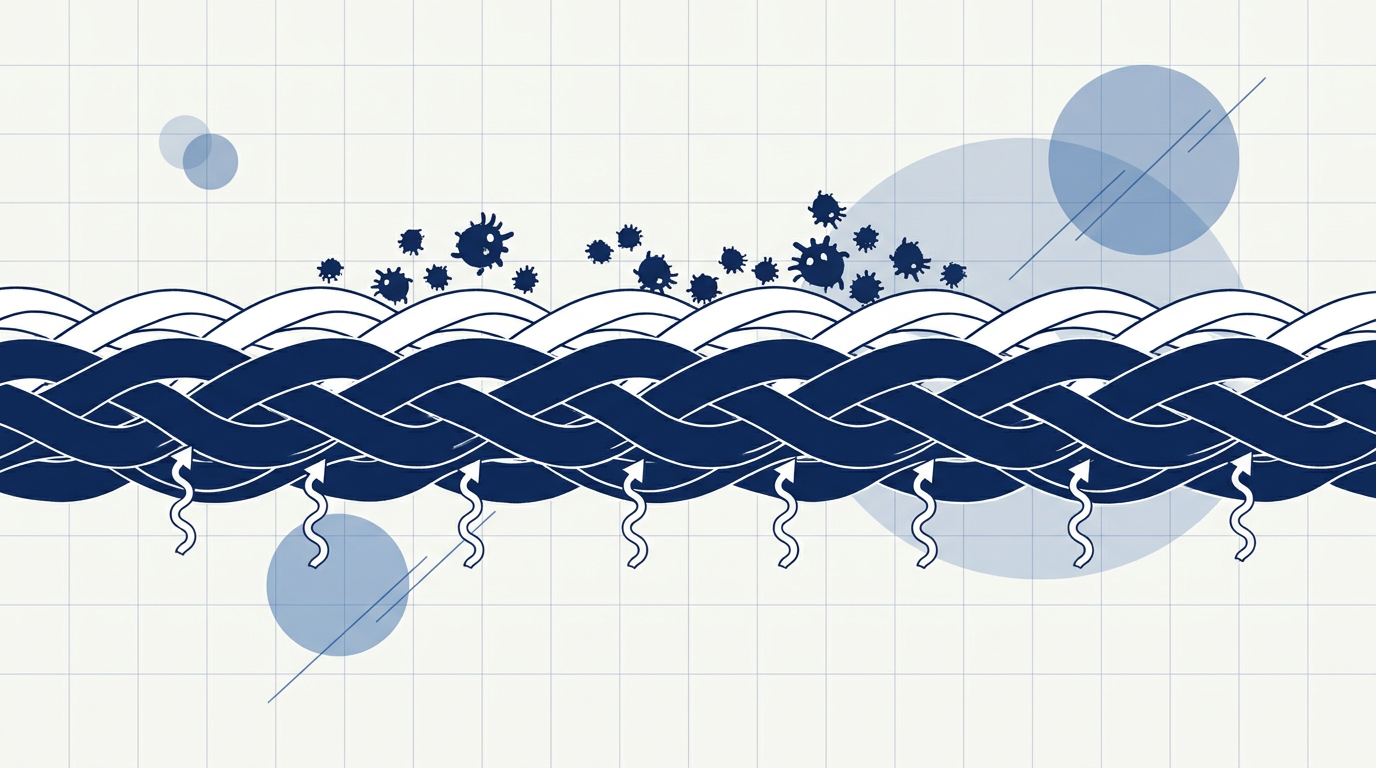 Physical mite barriers work by geometry: pores too small for mites to penetrate, but fully open to airflow.
The Physics of Mite-Barrier Fabric
Dust mites range in size from approximately 200 to 500 micrometers. An effective physical barrier fabric must maintain pore sizes consistently below this threshold while still allowing air to pass through freely.
This is achieved through high thread count combined with compact satin weave construction — a technique that interlocks fine yarns into a dense, smooth surface with smaller gaps than standard weaves. The result is a fabric that mites cannot physically penetrate, without any chemical addition required. Air circulates. Mites do not.
For filling materials, the equivalent approach is engineering the fiber structure itself to resist mite colonization — making the internal environment unsuitable for mites to thrive rather than simply trying to block them at the outer layer.
This two-layer thinking — barrier fabric on the outside, mite-resistant filling on the inside — is what comprehensive protection actually looks like.
Beyond Mite Protection: What Sensitive Skin Needs From Bedding
People with sensitive skin, allergies, or respiratory conditions need more than mite control. They need an environment that removes as many irritants as possible simultaneously.
This means:
- Absence of formaldehyde, harmful dyes, and aromatic amines — chemicals present in lower-quality textiles that can cause or aggravate skin irritation
- Effective antibacterial properties — targeting the most common textile-associated bacteria, including Staphylococcus aureus and E. coli
- Easy washability — because regular laundering is the single most effective way to maintain a low-allergen sleep environment. Bedding that can't be machine washed easily tends not to be washed as often as it should be.
The Sensitive Series: Designed for Those Who Can't Afford to Compromise
Our Sensitive Series was designed around one question: what would truly clean, safe bedding look like if you started from first principles?
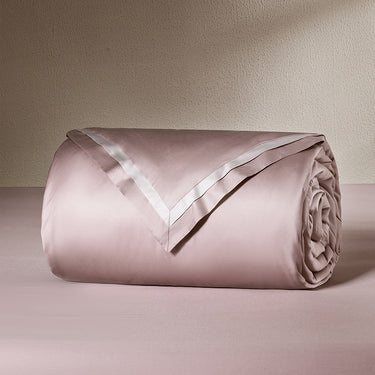
The outer fabric uses 100-thread-count satin cotton with a compact weave structure that creates a physical mite barrier — no chemical treatment involved. Inside, the filling uses advanced mite-resistant antimicrobial fiber that provides a second layer of protection, reducing the chance of mite colonization within the bedding itself. Both the outer fabric and filling materials have been independently tested and certified for mite resistance and antibacterial performance.
All materials meet Class A national textile safety standards — the top tier of China's textile safety framework, with no detectable formaldehyde, no harmful dye compounds, and no irritating chemical additives. Machine washable. Easy to fold, easy to launder, quick to dry. Because a mite-resistant product that's a chore to clean will inevitably not be cleaned often enough — and that defeats the purpose entirely.
The best protection isn't dramatic. It works quietly, consistently, every night — without you having to think about it.